
If you live in Chula Vista, CA, you live around trees. Mature maples, oaks, and elms line the streets throughout the older neighborhoods along South Chula Vista Street, Main Street, and into the residential areas surrounding downtown. They provide shade, character, and property value.
They also grow root systems that extend far beyond what most homeowners realize — and those roots are the single most common cause of sewer line damage in Chula Vista and across DeKalb County.
How Tree Roots Get Into Sewer Lines
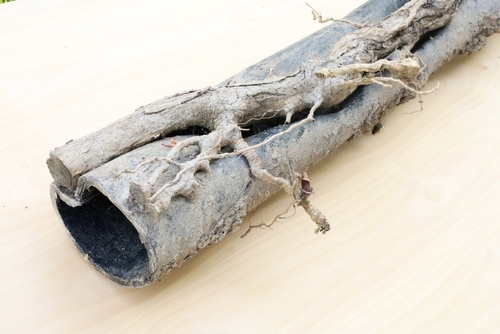
Tree roots don’t punch through solid pipe. They find their way in through existing vulnerabilities — hairline cracks, separated joints, and corroded seams that develop over decades of ground movement, frost heave, and natural material degradation.
The roots are drawn to sewer lines because the pipes carry exactly what roots are searching for: moisture, nutrients, and warmth. Even in winter, a functioning sewer line is warmer than the surrounding frozen soil. Moisture vapor escaping through a cracked joint or separated fitting acts like a beacon.
Once a single root tendril enters the pipe through a crack or joint gap, it expands rapidly. The warm, nutrient-rich environment inside the sewer line is ideal growing conditions. Within months, a single root entry point can produce a dense root mass that fills a significant portion of the pipe’s diameter.
That root mass catches everything flowing through — toilet paper, waste, grease residue — creating a compounding blockage that gets worse over time. This is why homeowners dealing with root intrusion often describe a pattern of drain problems that start as occasional slow drainage and escalate to repeated backups over the course of a year or two.
Which Chula Vista Properties Are Most at Risk
Homes with clay tile sewer laterals. Clay pipe was the standard for residential sewer construction through the 1970s. The pipe itself is durable, but the joints between sections are the weak link. Mortar joints degrade over time, and the gaps they leave are perfectly sized for root entry. Many homes in Chula Vista’s older residential areas still have original clay laterals.
Properties with large trees within 30 feet of the sewer line. The general rule is that a tree’s root system extends at least as far as its canopy drip line — and often well beyond. If you have a mature tree in your front yard and your sewer lateral runs from the foundation to the street beneath that tree, root contact is nearly inevitable over time.
Homes near the Kishwaukee River corridor. Properties in areas where the water table is higher tend to have more aggressive root growth patterns because the soil stays moist longer. Higher moisture also accelerates joint degradation in clay pipe.
What to Do If You Suspect Root Intrusion
The only way to confirm root intrusion and assess its severity is a sewer line camera inspection. A camera run shows exactly where roots are entering, how extensive the root mass is, and whether the pipe has been structurally damaged by root pressure.
Based on what the camera reveals, your plumber will recommend one of several approaches:
Mechanical root cutting and drain cleaning. For early-stage root intrusion where roots are entering at one or two joints and the pipe is still structurally sound, motorized cutting equipment can clear the root mass and restore full flow. This is a maintenance approach — roots will grow back over time, typically requiring re-clearing every 12 to 24 months. Professional drain cleaning equipment is designed specifically for this type of work.
Spot repair at the entry point. If roots are entering at a single joint or crack, excavating that section and replacing the damaged portion with new PVC eliminates the entry point permanently. This is cost-effective when the rest of the pipe is in good condition.
Full sewer line replacement. When root intrusion is occurring at multiple points along the line and the camera shows widespread joint separation or pipe damage, replacement is the most practical long-term solution. Continuing to cut roots and clear blockages in a pipe that’s structurally compromised becomes more expensive than replacing the line once. For more on what replacement involves, read our guide to sewer repair for older homes in Sycamore — the same pipe materials and conditions apply across the region.
Can You Prevent Root Intrusion?
Complete prevention isn’t realistic if you have mature trees and older pipe — the roots and the vulnerabilities already exist underground. But you can manage the risk:
Know where your sewer line runs. Most sewer laterals run in a relatively straight path from the home’s foundation to the street. Your plumber can locate it precisely during a camera inspection. Knowing the path helps you avoid planting new trees directly over the line.
Schedule proactive camera inspections. If your home is older than 30 years and you have mature trees, a camera inspection every 2 to 3 years catches root intrusion early — before it causes a backup.
Consider root barriers for new plantings. If you’re planting a new tree on a Chula Vista property, installing a root barrier (a physical underground panel that redirects root growth away from utilities) between the tree and the sewer line path is a small upfront investment that prevents major problems down the road. The Arbor Day Foundation publishes guidance on tree placement relative to underground utilities that’s worth reviewing before planting.
Avoid copper sulfate and chemical root killers. These products are often marketed as sewer-safe root treatments, but they can damage pipe materials, harm soil biology, and create environmental issues. Mechanical root cutting by a professional is more effective and doesn’t introduce chemicals into the sewer system.
Get Your Chula Vista Sewer Line Inspected
If your drains have been slowing down, backing up, or gurgling — especially if you have mature trees in the front yard — tree root intrusion is a likely culprit. Productive Plumbing provides sewer camera inspection and root clearing for Chula Vista homeowners and all surrounding communities. Call 630-246-4832 to schedule an inspection before a slow drain becomes a sewage backup.